Wednesday, March 16, 2011

Website-Infoplease.com


Infoplease
http://www.infoplease.com/

Infoplease is a well established internet site, which provides authoritative answers to questions. This website has a number of resources for tweens, such as; sports, news, history, health and science, and much more. Infoplease has a wonderful biography section which is well organized and easy to navigate through. There are thousands of people to choose from, both historical and modern day biographies. Each person has a short description of their life, with important accomplishments, birthday, death days (if applicable), and there are further links with more information. Also, some biographies have pictures

Website- Bio4Kids


Bio4kids
http://www.biography.com/bio4kids/index.jsp

Bio4Kids is an awesome site! They have many resources and tools centered around influential people, which students can use for homework, projects, and questions. Their biography section has tons of Pop-cultures biographies such as; Oprah Winfrey, Lil Wayne (rapper), President Obama, Charlie Sheen, etc. They also have a large selection of historical biographies; Rosa Parks, Jackie Robinson, Albert Einstein and many more. The organization of the website is so easy to follow and there are many fun activities the tweens can do as well. There are different forms of media tools about the person; videos, pictures, news articles, and sound bytes. Bio4Kids has designed a site that attracts tweens, but still meets the information requirements for learning.

Professional Reading Log -Week 7

What surprises you about the research from our readings? What beliefs, attitudes or opinions does this research appear to confirm or contradict?
What are the implications here for addressing the needs of tweens in our libraries?

I wasn’t really surprised about much of the findings. With the advances in technology, the amount of people who are constantly connected to the media has advanced as well. Even in the last 10yrs, the age that most children own a cell phone is much lower than it use to be. What worries me about these articles and studies is, there is little to no mention of parent monitoring their use. With the amount of inappropriate, violent, demeaning, and trashy material children are losing their sense of reality and connection to the “natural” world. Children spend so much time involved with the media and television that they are mixing what’s real and what fake. However, we do have to grasp that technology and staying connected 24/7 is part of society, so we could either embrace it or fight it. If we embrace it we can connect young adults to the library 24/7 and we can teach them the difference between what’s real and what’s not. Instead of letting them find their way through the mass amounts of media, perhaps we take advantage of this constant connection and steer them in positive ways to use what’s at their fingertips.


There were a few findings that I found interesting. In the study by Rideout, Foehr, & Roberts the looked at ethnicities and the differences between media use; “For example, Hispanic and Black youth average about 13 hours of media exposure daily (13:00 for Hispanics and 12:59 for Blacks), compared to just over 8½ hours (8:36) among Whites. Some of the biggest racerelated differences emerge for television time: Black youth spend nearly six hours daily watching TV and Hispanics spend 5:21, compared to 3:36 for Whites.” I would like to see a more in-depth perspective on this issue, because I don’t feel that this is true for all areas. This all depends on the child’s home environment, socioeconomic status, and support structure. The researchers do mention this “the relationships between media exposure and grades, and between media exposure and personal contentment, withstood controls for other possibly relevant factors such as age, gender, race, parent education, and single vs. two-parent households (Rideout, Foehr, & Roberts, 2010).”


Social networking has manifested itself into something different for every person and for every age. Teens use Facebook to chat, make weekend plans, share pictures etc. Where as adults use it to find old friends, stay connected with long distances friends, spread news etc. Teens are engulfed in the social aspect of the sites, where as adults use it more to network. I think it is important for tweens and teens to stay connected, however I think there needs to be a class or lessons on safe, appropriate, and mature ways of using social networks. It should be taught in schools and at home, because too many children are misusing the networks and hurting others in the process! School and public libraries are a perfect place to advocate and teacher safe social networking skills and tools. I’m not saying social networking is a negative tool, I think it’s a great tool to stay connected with hundreds of people at a time, however I think there are some guidelines that need to be taught. Looking at social networking as a marketing tool for libraries, I think it would be a great way for librarians to be seen and heard. It also allows librarians to reach a large magnitude of people very quickly and some that may not notice the library otherwise.

Is access still a major concern? Is ability a concern?

Access is no longer a major issue, it is limited in certain areas and for certain demographics, but overall the number of people connected to the internet daily has maximized. Everywhere you look people are on their phones or iPads, being connected is affordable and more convenient than it has ever been. Along with increase of access came and increase in ability. More and more people are using the tools and technology advances that are available and using them to their maximum capability. However, I do feel that the ability of technology users is a generational issue. Young adults are much savvier when it comes to technology access, where as older generations struggle or avoid technology as much as possible. Tweens and teens are growing up in an era where technology and internet is always around them. They are immersed in a world where staying connect no longer means long chats on the phone, it now means instant messages, and emails. These teens are becoming the leaders in technology access and ability.

Although Meyers’s research focuses on the everyday information behavior, what issues does this research raise that may be important for school and public librarians to consider?

As librarians we often focus on developing a library and collection that meets the needs and demands of the information community, however there is a lack of educating the community on how to use it to their advantage. When tweens are searching for information they tend to relay on the people around them to guide them in the right direction. "Adults play important roles in developing information-seeking skills
through modeling and scaffolding behavior." We as information leaders need to start teaching tweens on how to use the library tools and resources appropriate and to their advantage. While doing this we must create a safe and supportive environment where tweens feel they can access when necessary. Meyers states "we found that it is access to other people that often makes or breaks an information search." Because tweens are at an age were they are leaving the comforts of childhood and moving into the world of impendence, they need to have adult figures they trust and are reliable.

Monday, March 7, 2011

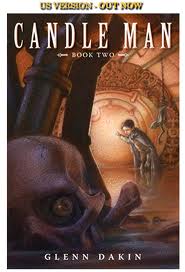
Candle Man: Book Two


Candle Man: Book two
By Glenn Dakin
ISBN 1606840193
Price $15.99
Fantasy

In the second book of the series, Dr. Saint is no more, Lord Dove has disappeared, and the Dodo has slipped back into seclusion, but for Theo Wickland, descendent of the Victorian crime fighter of legend, The Candle Man, the adventure is just beginning. He is now head of the Society of Good Works and is determined to turn the behavior of the order toward the betterment of humanity, starting with bringing the Network, the fascinating, secret underground maze of tunnels in London, back to its former glory. But dark forces still prowl below the London streets. Creatures and enemies of the Candle Man, who were thought to be dead, continue to plot the downfall of the world. Old enemies become new allies as Theo cobbles together a group to stop the sinister plans of these evil beings before they prove deadly. It is up to the new Candle Man, THEO, and his Society of Dread to snuff out these despicable plans, before it’s too late.

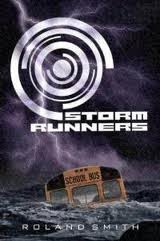
Storm Runners


Storm Runners
By Roland Smith
ISBN 0545081750
Price $16.99
Realistic Fiction

Chase Masters and his father are in search for the worst weather in the United States. Tornados, floods, hurricanes, and everything in the middle, is what they are after. While on the road Chase learns much more then he would in the classroom. Chase is dealing with the loss of his mother and sister and the fact that his father, who was struck by lightning, has decided to trek it across the United States looking for storms. When the end up in Florida Chase thinks this might be a good place to stay for awhile. This book depicts a 12 hour time frame, but teaches a lot about weather.

****

Edison's Gold


Edison’s Gold
By Geoff Watson
ISBN 1606840940
Price $15.99
Historical/Realistic Fiction

Tom Edison IV, the great–great-grandsons of Thomas Edison the inventor, is a smart boy with a lot of adventure, however he always seems to be in the shadow of his famous relative. When his parents inform him that they will be moving from New York to Kansas, Tom tries to fix his inventions to make money, but its no sue. However, when he finds the secret formula to one of his great-great-grandfathers invention, he knows this will save his family from moving. But he must keep it out of the hands of an evil billionaire whose been after it for years.

Tuesday, March 1, 2011

Week 5-Professional Readings

Week 5
I couldn’t agree more that socio-economic status has the largest factor on a students reading interest and ability. Being at two opposite socio-economic status schools, I am able to directly observe how high economic status differs from low economic status and their effects on tween boys. At the high economic school many boys are consistent, enthusiastic, and high level readers, however at the low socio economic school the boys are at very low reading levels and resist checking out books. There has been a change in the last year, however, the low school has begun to utilize the Accelerated reading program which pushes students to check out appropriate level books. The high economic school has been using AR for a few years, which has encouraged and pushed boys to read. What I find interesting, is now that the boys have to read, in order to reach a certain amount of points, they will take the time to choose a book they want to read, which improves their comprehension and increases their reading level. I think a reading program, like Accelerated Reading, is a great way for reluctant readers to get engaged in reading, but not by forcing them to read certain books. They have the opportunity to read what books they choose as long as it is in their reading range.
In order to “promote” reading and different books to boys, they need to find connections with the material. As observed in the study “Male Call” boys tend to read books with dangerous looking covers, characters that aren’t perfect, and topics they have already heard of; they choose books they can connect with. I think it is important as librarians to display some of these connections, through books talks or visual cues. This seems so basic and obvious, but it is difficult to reach all different readers, at all times. By constantly changing out bulletin boards, posters, book displays and sharing new titles, the more tweens we can reach…even the boys